Soldier Volodymyr Kotsur, call sign MENT
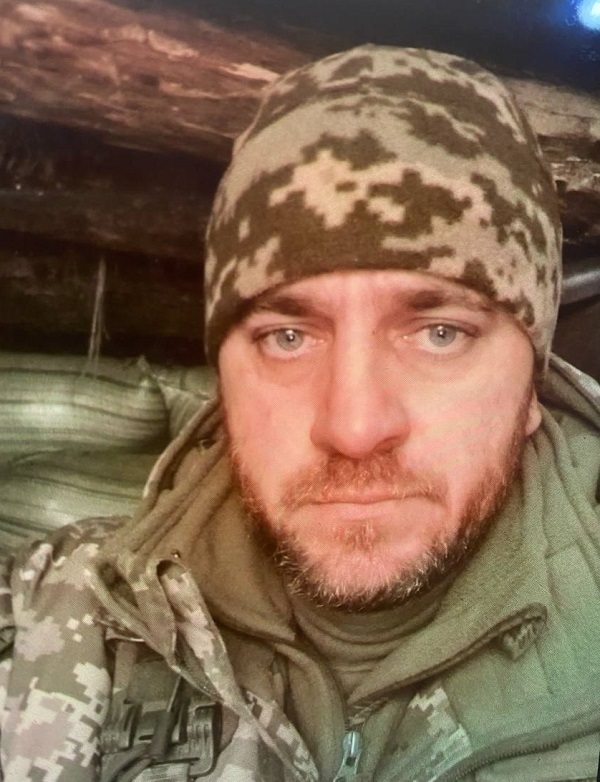
Before the war I worked in the police, so this call sign stuck with me in service as well. I had an ordinary life: work, a wife, children, a home, and plans for the future. One day, returning home from work, I received a summons. My wife and I sat down and had an honest conversation. I then decided to go and serve in the border service. We told the children that I was going on a training course. We did not want them to worry.
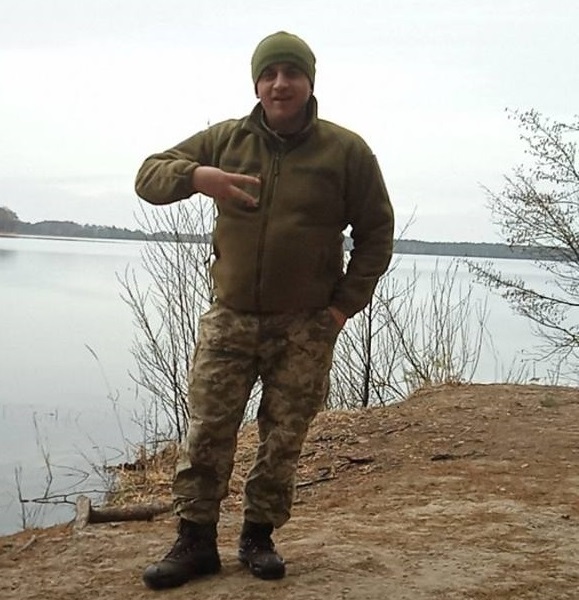
On February 8, 2024, I entered service. Back then I even joked that if I went to fight, the war would end sooner. My combat path went through Vovchansk, the Chornobyl zone, and the border of Volyn Oblast. Later our unit was transferred to the area of the Serebryansky Forests. Those were the most difficult positions. We all understood that this could be a one-way road.
My wife and I agreed: whatever happened, the children must not know all the horrors of war. When I found out that I had to go to the positions, I called my wife:
— There will be no connection. We will only have radios. I gave your number to my fellow soldiers, they will let you know when they have the chance.
I could not say much to the children. I only said:
— I will be back soon.
And at that moment, for the first time, I could not hold back my tears.
At the positions we held out for fourteen days. Those exact fourteen days I do not remember. I do not remember the moment of the wounding either.
My fellow soldiers told me it was a drop from a drone. The explosion threw my fellow soldier and me in different directions. I got the worst of it. Shelling continued all around, and the guys had to wait for a moment when I could be evacuated.
Everything that happened after that I know only from my wife’s words. She told me: “When the commander called your mother and said that you had been wounded in the head and were in critical condition, the ground fell out from under my feet. I started calling your fellow soldiers, trying to find out at least something. Together with your brother-in-law, we immediately set off for Dnipro.
At the Mechnykova hospital you were not found. They said there that we needed to look at the military hospital.
The most frightening thing was opening the doors of the intensive care unit. I was afraid to see the worst.
When I walked in, I saw that your arms and legs were intact. Your head was wrapped in bandages, and all around there were many tubes and machines helping you breathe.
I stood there and thought: ‘He is alive. He is whole. That means we will manage.’
The tears flowed without stopping, but inside there was hope.”
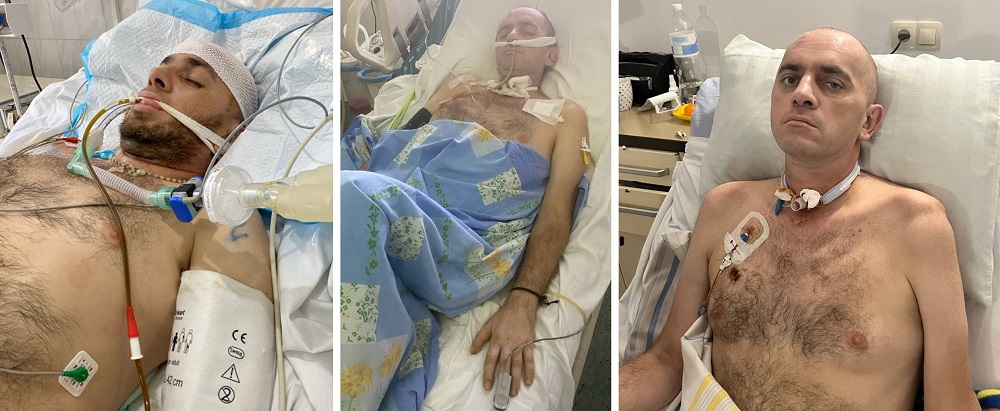
A few days later I was transferred to Kyiv. And again, all of this I know only from my wife’s words. She said: “The most difficult days began. The doctors said that the brain was barely responding. You were in a medically induced sleep. Every day I came to you and believed that you would come back.
Then one evening I received a call saying that you were being transferred to the Kyiv Regional Hospital. I arrived there with fear, and the doctor came out of the intensive care unit and said:
— Your husband is breathing on his own. The brain has begun to respond.
At that moment, for the first time in a long time, I cried from happiness.”
What my wife feared most was that I would not recognize her and the children. She told me: “I constantly talked to you, held your hand, asked you to give a sign. You could squeeze your fingers slightly, sometimes you would close your eyes.
One day the doctor asked:
— Who is this next to you?
And you quietly said — we almost had to read your lips:
— My wife.
Then you named your son and daughter. At that moment I understood that you were coming back to us.”
But many more trials still lay ahead.
Pneumonia set me back. A fight again. Treatment again. Uncertainty again.
On January 7 I was transferred to Lviv. My wife says that it was there that my new life began.
The tracheostomy was gradually removed, they began to do away with catheters and medical equipment. The body began to fight.
A few weeks later rehabilitation began. I relearned how to sit. I learned to maintain balance. I learned to control my body. Every movement came with great difficulty. Then came long months of rehabilitation at “Nezlamnykh,” at Next Step, and in Sianky. The doctors say that my traumatic brain injury is very severe, and every stage of recovery requires a great deal of time and effort.
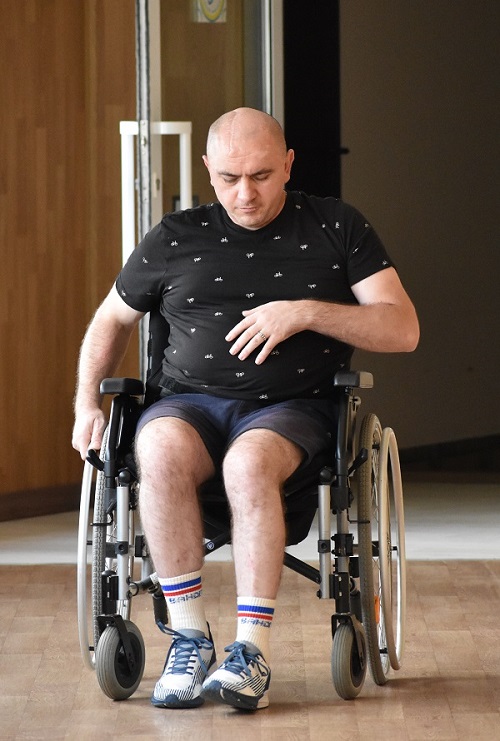
Today I am already able to dress myself, shave, and manage my daily needs independently. I go to my sessions on my own in an electric wheelchair. But the greatest fight continues to this day.
I still cannot walk without outside assistance.
My greatest dream is to get back on my feet. I want to walk alongside my wife. I want to embrace my children tightly. I want to make up for the time that the war took from our family.
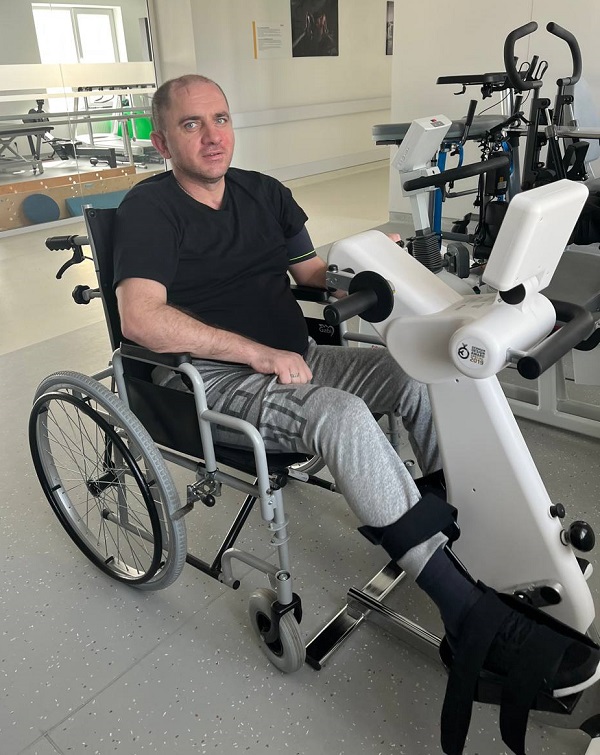
Today I need to undergo specialized rehabilitation at the “Western Rehabilitation and Sports Center” of the NCSPI. It is there that I have a chance to take one more step toward an independent life.
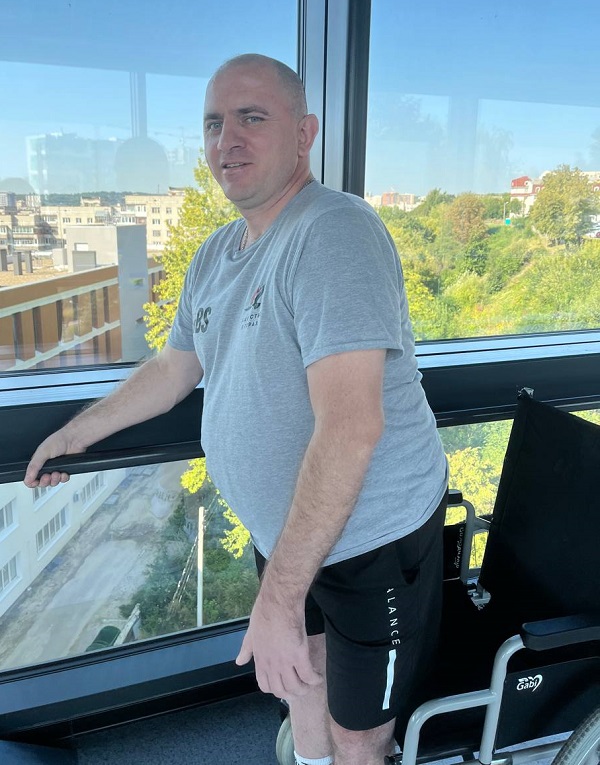
Today I continue my war — the war for the ability to walk again.
____________________________________________
The fundraiser for Volodymyr Kotsur’s rehabilitation has been successfully closed! The necessary amount was raised, and Volodymyr has already begun the specialized rehabilitation course.
For him this is not simply another stage of treatment. After an extremely severe wound, every such course is an opportunity to continue recovery, to become more independent, and step by step to move closer to his greatest dream to walk again.
We sincerely thank everyone who joined the fundraiser: made a donation, shared the information, told others about Volodymyr’s story, or offered a kind word of support.
It is precisely thanks to you that this rehabilitation course became possible.
We also express our deepest gratitude to the team of the Ukrainian charitable fundraising online platform dobro.ua for their informational support and assistance in carrying out this fundraiser. Thank you for helping to make the stories of our wounded defenders visible, for uniting caring people around them, and for supporting important fundraisers for treatment and recovery.
Much persistent work still lies ahead for Volodymyr. After a severe traumatic brain injury, every new achievement requires enormous effort. But he does not stop and continues to fight for his independence.
After the rehabilitation is completed, we will definitely share the results.
We thank everyone who stays by our side. Thank you for your trust and your caring!
____________________________________________
Volodymyr Kotsur has completed the rehabilitation course. And today we want to share his results.
After extremely severe wounds, victories are measured in an entirely different way. A victory is not to start walking independently after one rehabilitation course, but to cover a few more meters in six minutes. To maintain balance more confidently. To perform an arm movement more quickly. To become a little stronger and take one more small step toward greater independence.
For a person who has survived a wound as severe as Volodymyr's, even a small positive change is a great victory. Because behind every figure in the specialists' conclusions stand dozens of repetitions, daily work, fatigue, and an enormous desire to return the lost capabilities to one's body.
Volodymyr's rehabilitation goals were aimed above all at increasing independence in daily life: improving walking, its speed and endurance, working on balance, and reducing the risk of falling.
During the course these goals were partially achieved. And the results of this work are already visible:
- At the beginning of the course Volodymyr covered 75 meters in six minutes, and at the end — 81 meters.
- The time to cover 10 meters improved from 43.05 to 40.24 seconds.
- The Berg Balance test score increased from 28 to 29 points out of 56.
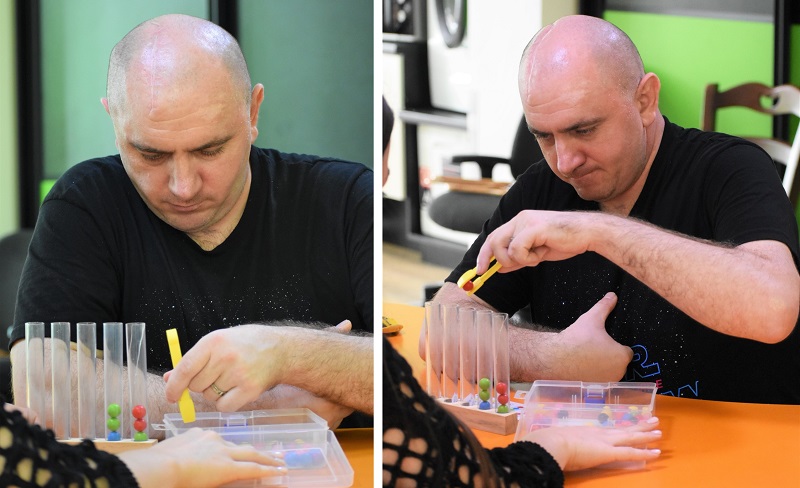
Positive dynamics are also noticeable in arm function. Volodymyr performed the fine motor test with the right hand in 35.81 seconds, and after the course — in 28.08 seconds. For the left hand the completion time improved from 3 minutes 40 seconds to 1 minute 57 seconds. The strength of the left hand also increased — from 6.8 to 9 kg.
Recovery after an extremely severe injury is not a straight road where after every course all indicators necessarily improve. It is a long path on which one result may improve more quickly, another will require significantly more time, and every new skill has to be fought for persistently.
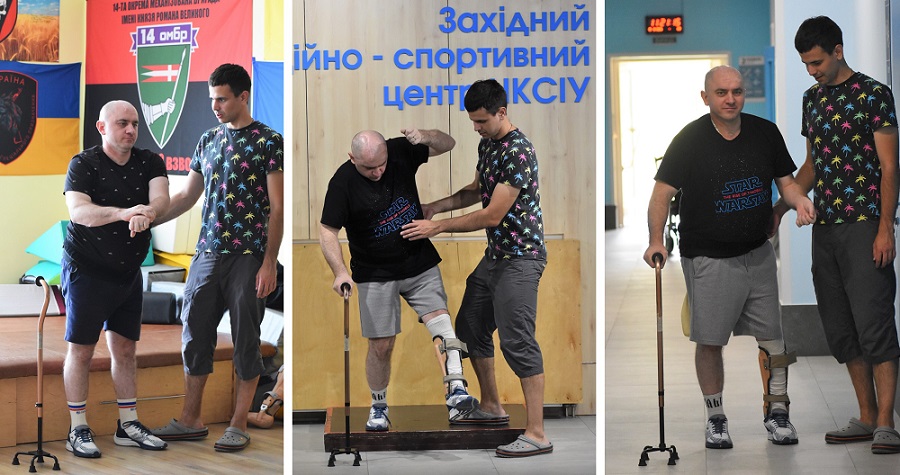
Volodymyr still has a high risk of falling, so for safe movement the specialists recommend continuing to use the wheelchair. It is also recommended to continue rehabilitation at his place of residence, to work on social and everyday adaptation, and to maintain daily physical activity.
So Volodymyr's path does not end with the completion of this course.
It continues.
We sincerely thank everyone who helped Volodymyr complete this rehabilitation course. Your donations, shares, and support were transformed into a real opportunity to work on recovery.
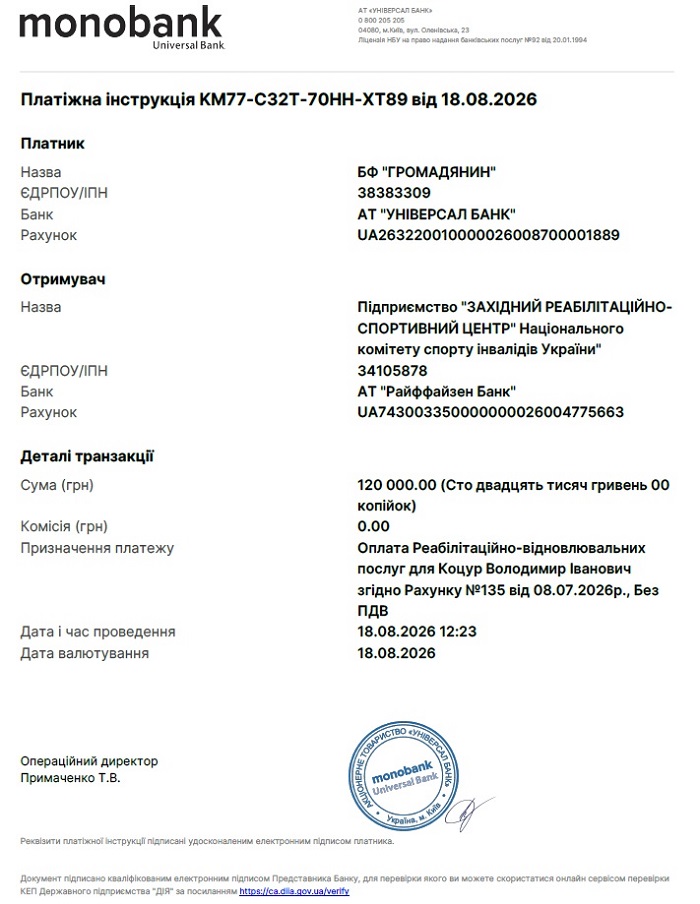
COLLECTED AND TRANSFERRED: UAH 120,000